
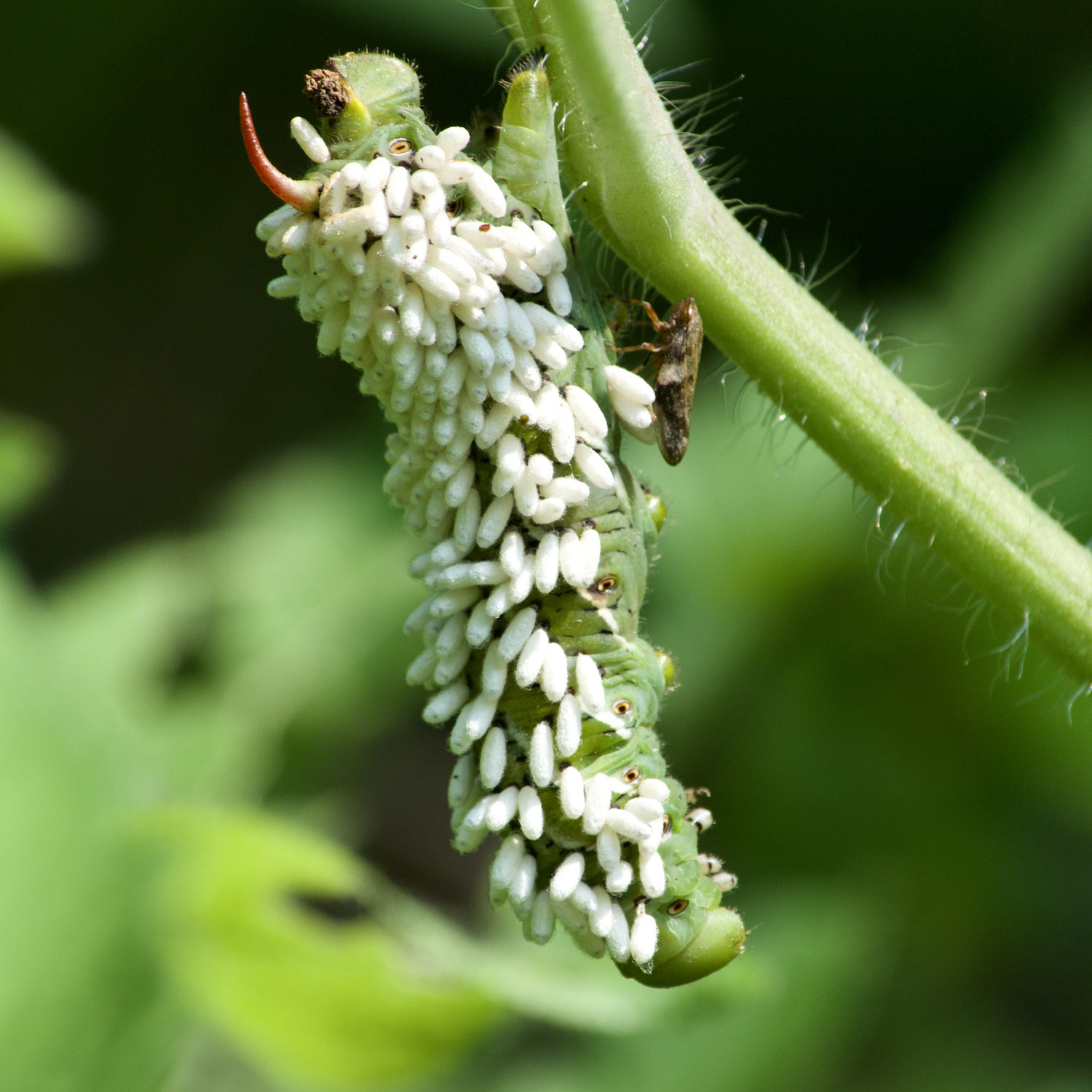
It is hard to believe that leaving a log or downed tree in the woods might help you grow better vegetables, but it might just be true.
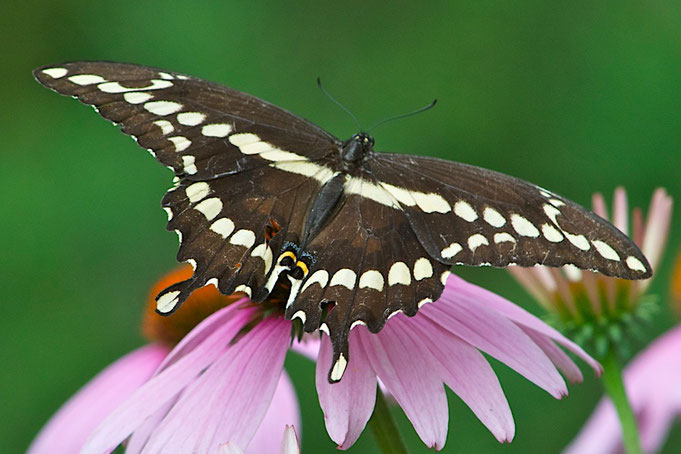
The Giant Swallowtail (Papilio cresphontes) is the largest butterfly in Canada and the United States. Adults have a forewing span of 4 to almost 6 inches (avg. 5.5 inches) for males and a span of 5 to 7 inches (avg. 5.8 inches) for females. It is an uncommon stray in southern New Hampshire and Vermont, but we have had them here at Distant Hill Gardens for the past two years.

All insects change in form as they grow; this process is called Metamorphosis. There are two kinds of insect metamorphosis, simple (or incomplete) and complex (or complete) metamorphosis.

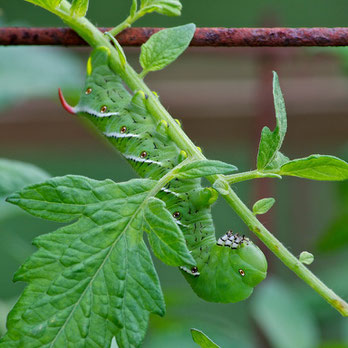
This is a photo of a tobacco hornworm, the caterpillar of a Carolina sphinx moth (Manduca sexta) feeding on a tomato plant at Distant Hill Gardens. The tobacco hornworm, is closely related to, and often confused with, the very similar tomato hornworm. Both feed on plants in the Nighshade Family. The tomato hornworm is the caterpillar of the five-spotted hawk moth (Manduca quinquemaculata). Note the Red horn at the tail end of the caterpillar, and the seven diagonal lines on its side. These...
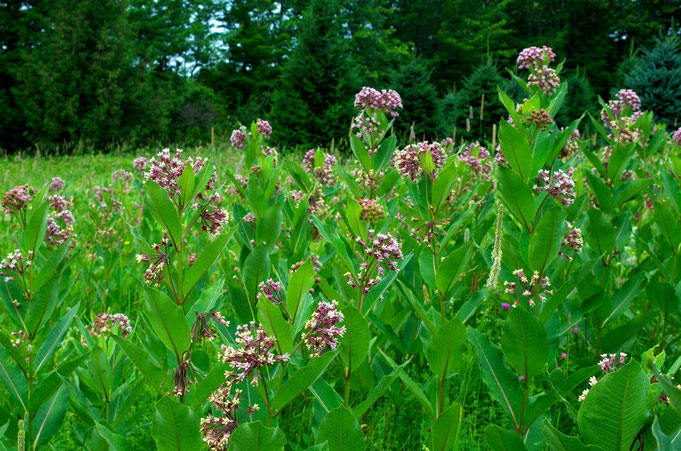
Monarchs butterflies need milkweed to survive. The caterpillars feed on the leaves, which makes them unpalatable to birds. The sap contains cardiac glycosides, which are toxic to birds. We favor the milkweed in our fields and go out of our way to help it thrive. We have found that mowing in mid May, just as the milkweed plants are emerging, works best. It develops a healthy crop for the Monarch butterflies by cutting the already tall grasses. The milkweed isn't cut, which allows it to become...
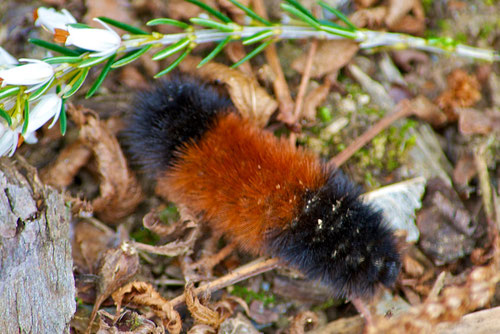
The Banded Woolly Bear Caterpillar is found in temperate regions of North America. It emerges from the egg in the fall and overwinters in its caterpillar form, when it literally freezes solid. It survives being frozen by producing a cryoprotectant in its tissues. Because the summer period for vegetative growth and hence feeding is so short in some northern areas, the Woolly Bear can feed for several summers, freezing again each winter before finally pupating. Some are known to live through as...
Please Support Our Generous Sponsors








Distant Hill was listed as one of the Top 10 Places to Visit in New Hampshire!
or send a check via Snail Mail to:
Distant Hill Gardens and Nature Trail, 507 March Hill Road, Walpole, NH 03608
Friends of Distant Hill (dba Distant Hill Gardens and Nature Trail) is a nonprofit,
tax-exempt organization under Section 501(c)(3) of the U.S. Internal Revenue Code.
Donations are tax-deductible as allowed by law. Tax ID# 84-3765898